
September–November 2026
In-Depth Education
in the Comfort of Your Home
Online via Zoom
MORE DETAILS FOUND HERE
Independence and Identity: 250 Years of Opportunity, Diversity, and Belonging in America
Katherine R. Willson
Americans have sought independence, opportunity, and belonging for 250 years, while also facing hardship, exclusion, and change. This course looks at our nation’s history through the everyday lives of families and communities from diverse ethnic, cultural, and religious backgrounds, demonstrating how their choices were shaped by shifting social, political, cultural, and economic forces. From the Revolution to today, we’ll follow Native communities, free and enslaved Black Americans, immigrants from around the world, and others seeking land, work, safety, and new futures. We’ll hear the voices of women, workers, and people whose stories are often overlooked, and see how reform, war, innovation, and recovery reshaped family life and community ties. Together we’ll uncover how ordinary people created, endured, and redefined what it means to belong in America.
Advanced Evidence Analysis Practicum
Angela Packer McGhie, CG, FUGA
 This course provides an opportunity for advanced genealogists to gain hands-on experience solving tough cases. They challenge themselves as they put their research skills into practice. Participants work on five complex genealogical research problems — a new one each week. The objective is to give students experience in conducting research on complex problems, analyzing and correlating information, and writing conclusions.
Participants will practice using indirect evidence, broadening research to include the FAN club, resolving conflicts, and organizing evidence into a written summary. The research problems are varied, offering students the challenge of stretching their minds and skills in directions that their research may not have taken them. Participants will work individually on each of the cases and then gather to discuss their progress with classmates and the instructor. They will compare sources, strategies, and methodologies, discuss difficulties encountered, and receive guidance from the case study author.
This course is designed for advanced genealogists who have sufficient experience and education to work on complex genealogical problems. Most students plan 15-20 hours per week to work on the cases and write up a summary of their findings.
Assemblage: Preparing, Writing, and Revising Case Studies
Jan Joyce, DBA, CG, CGL, AG

You’re a good writer and a great researcher—but sometimes your work doesn’t land the way you hoped. “Assemblage” helps you refine your writing skills and master the craft of editing. This course focuses on shaping, splicing, dicing and piecing together your writing—whether it’s constructing a meticulous case study, fine-tuning an article for submission to a journal, refining a client report, or assembling family tales into an inspiring narrative. Learn to refine your voice, structure your ideas, and transform drafts into compelling, polished pieces.
Bring ’Em Back to Life: Writing Our Ancestors’ Stories
Jenifer Kahn Bakkala
Stories that are not shared become lost. As family historians we have an obligation to share our research in forms that will endure. We also have an obligation to share our family stories in forms that will appeal to our non-genealogist family members, so they understand the remarkable heritage our ancestors have left us. Writing these stories can seem like a daunting task, but with instruction and coaching, researchers can learn to be not just guardians of the family history, but tellers of those family stories.
DNA Dreamers in Action Workshops
Karen Stanbary, LCSW, AM, CG, CGG
 Every research project is unique—challenging us with its own twists and turns. There is no one-size-fits-all approach. The genealogist relies on tried-and-true genealogy principles to inform an efficient research process. Disciplined genealogists avoid time-sucking rabbit holes that rarely lead to credible conclusions. They are wary of AI-produced hints and resist rapid and frenzied short-cut clicking. Rather, disciplined researchers recognize decision-making junctures and carefully consider the various options before choosing the next best steps.
These hands-on workshops will provide the opportunity to participate in real-time problem solving for a variety of common research scenarios that benefit from genetic evidence. Each workshop will teach the principles that inform decision-making under uncertainty, before a solution emerges. The emphasis is on the reasoning process that leads to credible outcomes.
Day one of the two-day workshop encourages participants to engage in live-action research on a typical research problem using DNA. Day two will reinforce the principles from the previous session as the class collaborates on working through a dynamic research plan on two selected student-submitted problems.
Two separate workshops will be available:
Those Thrilling Trillings
Not All Greek to Me: Decoding an Unexpected Admixture
Foundations: The Research Process
Annette Burke Lyttle, MA, CG
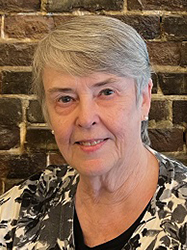 The goal of this course is to help students understand the genealogical research process in order to be able to research efficiently and effectively to produce reliable answers to research questions. Students choose a research project of their own to work on throughout the course, and weekly homework assignments allow students to immediately practice skills they are learning.
Every step of the research process is covered: formulating a useful research question, assembling and analyzing starting point information, researching the locality of the target ancestor, constructing a research plan, understanding source citations, logging and organizing research, analysis and correlation, and writing up results. The course also includes mind mapping to visualize information, how to know when the question has been answered reliably, and what to do if the research plan doesn’t provide an answer. A session on AI tools for genealogy provides a glimpse into the future. Two workshops and the opportunity for one-on-one consultations with instructors provide students with the chance to engage with the faculty and each other about the research process.
This is a companion course to Foundations: Methods and Records.
German Phase 2: Research the Hometown Online
Debra A. Hoffman, PLCGS & Teresa Steinkamp McMillin, CG
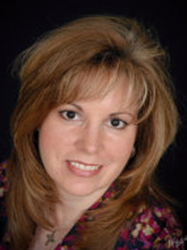

Church and civil records are the primary resources used to trace one’s ancestry. Many of these records are available online. This course teaches how to find available church/civil records for their German hometown and use them to their fullest. If the records are not available online, students will receive guidance on hiring someone to do that research. The course will introduce other resources available online. Some basic handwriting and language skills will be taught. Students will be given resources for expanding their knowledge.

Learn: from the field’s top educators in live weekly sessions
Obtain: in-depth instruction
Network: in a private Facebook group
Attend: online, from the location of your choice
Study and Learn: on your own schedule throughout the week

Instruction Levels: SLIG Virtual offers a variety of courses, taught at a variety of levels, specific to the virtual needs of our students.

Schedule: Each course meets on its own schedule weekly. Full course descriptions, outlines, and prerequisites will be posted in April.

Other: Some courses are supported by closed Facebook groups and homework assignments. All will include the option to re-watch recordings of sessions to ensure clear understanding. Please review each course page for full details of requirements and expectations.