
February–May 2027
Take Your Skills to New Heights
Registration will open on September 12th, 2026.
The Art of Writing Research Reports
Debra A. Hoffman, PLCGS
Want to effectively capture your research no matter the audience? Writing effective research reports can be a challenge. This course will provide instruction and hands-on experience creating an efficient and effective report. A team of professional genealogists will share their expertise in technical writing, evidence analysis, incorporating visual elements, organizing material, time-saving strategies, and documentation. Examples of a variety of reporting formats covering simple to complex research problems from a variety of professional perspectives will be shared and available to review during the course. Participants will learn both by evaluating provided reports and writing a research report during the week. Students will work on practice exercises in class and complete writing assignments.
Becoming an Accredited Genealogist® Professional: Why, What, and How
Lisa Stokes, AG
Earning the Accredited Genealogist® credential with the International Commission for the Accreditation of Professional Genealogists (ICAPGen) provides opportunities to demonstrate research proficiency in a chosen region. Benefits include strengthened research skills, confidence in performing client work, and respect in the genealogy community.
This interactive, hands-on course will cover the requirements for each ICAPGen accreditation step and give valuable information needed for successful testing. Homework assignments will provide essential skill-building activities. Peer review using ICAPGen rubrics will provide students with vital feedback. A four-hour practice Final Project and a personalized meeting with an AG mentor knowledgeable in the chosen region of accreditation will cap off the course. Discover your accreditation readiness as you learn more about the testing process and receive peer and mentor feedback on your work.
Bring 'Em Back Again! Advanced Workshop for Writing Our Ancestors’ Stories
Annette Burke Lyttle, MA, CG
Jenifer Kahn Bakkala
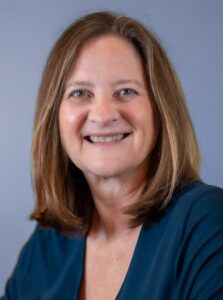
This online workshop-style course is intended for those who already have experience with writing a genealogical narrative. Based on the concepts of “Bring ‘Em Back to Life: Writing the Stories of Our Ancestors,” this interactive follow-on class will feature advanced instruction, discussion, and planned writing time. The focus will be on writing ancestors’ stories in narrative style, rather than in journal or report style.
Students will work on one piece of their own writing during the course, whether it be a stand-alone story or a portion of a larger story. Students will submit up to five pages of writing to the instructors during the process and will receive detailed feedback.
In Weeks 1–9, the class will be composed of two parts. The first part will focus on instruction in advanced skills in genealogical story writing in an interactive format. The second part will offer students the chance for dedicated writing time as a group. During the second part, an instructor will be available in a breakout room for any students who have questions or are seeking individual support. In Week 10, students will have the chance to share a portion of their writing with the group.
Death in Context 2: Exploring Health, Funerals, Mourning, and Memorial Landscapes in America
Gena Philibert-Ortega, MA
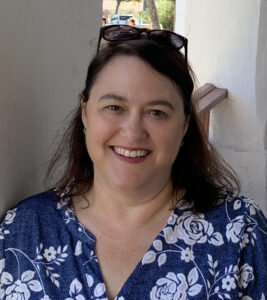
The first course in this series, Death in Context: Exploring Records, Burial Practices, and Memorial Landscapes in America (part 1), examined the records, cemeteries, and material culture that document death, providing students with a foundation for researching and interpreting the end of an ancestor’s life. Building upon that foundation, this second course expands beyond traditional genealogical sources to examine the broader historical and cultural context of health, death, funerals, burial practices, memorial landscapes, and remembrance in America.
Through an interdisciplinary approach that draws upon social history, material culture, and the history of medicine, students will explore topics not typically included in genealogical research and consider why they are essential to understanding the lives of past generations. By placing records within their historical context, participants will gain new perspectives on the experiences that shaped their ancestors’ final days, the customs surrounding death and mourning, and the communities in which they lived.
The goal of this course is to provide an in-depth exploration of death, burial, and mourning that enables researchers to move beyond just documenting an ancestor’s death toward interpreting its historical significance. Students will leave with a richer understanding of the people, places, and practices that surrounded death, allowing them to craft more complete, nuanced, and historically grounded family histories.
**Please note: This course is Part 1 of a 2-part series. Part 1 focuses on records, cemeteries, and grave markers. Part 2 explores records and the social history surrounding death including funerals, mourning, health, and cemeteries. For those who want to register for Part 2, you will need to have taken the previous version of Part 1 or the new updated version to prepare you for Part 2.
Income Streams in Genealogy: Diversified Strategies
Katherine R. Willson
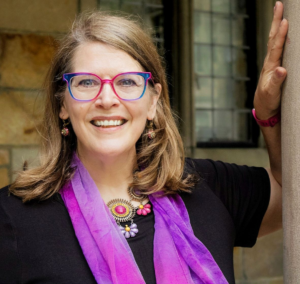
Genealogy work is more diversified than ever, and today’s professionals earn income through a wide mix of services, platforms, and audiences. Genealogy has many markets, not one, and this course looks at how those segments operate and how they can be combined into sustainable income.
Most sessions will be Q&A with working professionals about how the work functions, how fees are set, and where new opportunities are emerging. We’ll also cover the business side, including contracts, communication, marketing, management, and money, and how to align strengths, audiences, and offerings into a solid revenue mix. Professional considerations such as ethics, copyright, privacy, confidentiality, and how to communicate sensitive or unexpected findings will be woven throughout, since reputation and client trust are central to this work.
Proving Your Pedigree with DNA
Karen Stanbary, MA, LCSW, CG®, CGG®
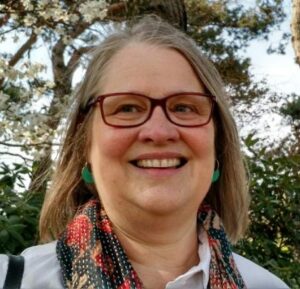
This hands-on course provides the opportunity for students to apply DNA analysis skills to document one ancestral line back to a second great-grandparent couple. The faculty offers practical step-by-step case examples. The schedule includes ample opportunity for the students to practice and apply the skills to their own research. Private, one-on-one consultation time with faculty is available.
At course completion, students will leave with:
• A source-cited lineage, including proof of biological parentage that meets Genealogy Standards
• A graphic descendant tree
• A unique, student-generated “Golden Nuggets” Quicksheet
The course teaches integration of documentary and genetic evidence to achieve proof. It is best to learn the methodology on an easier case. Students select one ancestral line in advance. A good choice would be a well-documented line from a DNA test taker to a second great-grandparent couple that is free of unknown parentage and pedigree collapse. Optimally, the student will use autosomal test results from second and third cousins on each of the great-grandparents lines to filter and sort DNA match lists. The cousins can be serendipitous matches or those that result from targeted testing.
Reconstructing Ancestral Neighborhoods & Networks
Kimberly T. Powell, AG
 Understanding the physical and social landscapes where our ancestors lived can be crucial to solving problems of identity, kinship, and origin. This hands-on, advanced course, for students with experience in land records and platting, offers critical skills and practical strategies for constructing community networks around elusive ancestors. We’ll explore the integration of advanced land platting techniques with modern mapping technologies and historical maps to place ancestors in a specific location, trace the development of the neighborhoods in which they lived, and uncover insights into historical relationships and migration patterns. In-class examples and exercises will also demonstrate triangulation techniques for determining approximate location from partial data and the use of reconstructed ancestral networks to identify key associates, disambiguate same-name people, and locate “missing” individuals.
Tracing French-Canadian Ancestors and Telling their Stories
David Ouimette, CG, CGL

In this course, you will learn how to trace your French-Canadian family history back to your pioneer ancestors and their origins in France. You do not need to know French to have amazing success discovering your French-Canadian ancestry. The rich historical records from the colony of New France to modern-day Quebec are the envy of the genealogical world, and the most valuable records are already digitized, indexed, and available online. You will find your ancestors’ stories in Catholic parish registers, notarial acts, census population schedules, and other lesser- known records. You will envision your French-Canadian ancestors in their everyday life within the social, religious, economic, political, and cultural contexts of their time. You might even discover that you have a fur trader, Daughter of the King, or First Nations ancestor in your family tree. Join us to accelerate the discovery of your French-Canadian heritage!

Learn: from the field’s top educators in live weekly sessions
Obtain: in-depth instruction
Network: with course faculty and students
Attend: online, from the location of your choice
Study and Learn: on your own schedule throughout the week

Instruction Levels: SLIG Spring Virtual offers high-intermediate to advanced education on professional topics such as business management, public speaking, writing, teaching, forensics, and project management. Courses are designed for those working in the genealogical industry, as well as those seeking to become professionals.

Schedule: The program begins with All-Participant Orientation on Thursday, February 12, 2026, 5:00 pm MDT. The Spring Virtual courses are held in a multi-week, virtual format via Zoom. The length of each course will vary as determined by the course coordinator to best deliver the designed curriculum.